
Viktor Koch · 26 September 2026
Exploring Crawl Budget Allocation Changes Following Domain Relocations and System Updates
Domain relocations trigger noticeable adjustments in how search engines distribute crawl resources across websites, and system updates compound these effects through altered server responses and content structures. Researchers track these patterns by monitoring server logs and indexing reports, which reveal that new domains often receive reduced initial crawl rates until search engines establish trust signals through consistent 301 redirects and stable performance metrics.
Understanding Crawl Budget Basics
Crawl budget represents the volume of pages a search engine processes on a given site within a specific timeframe, and factors such as site size, update frequency, plus server capacity determine its allocation. Data from web infrastructure studies shows larger domains with frequent content refreshes receive higher budgets, whereas smaller or static sites experience more conservative scanning schedules. When a relocation occurs, the process restarts because the new domain lacks prior history, forcing search engines to re-evaluate from scratch while honoring redirect chains that point back to original content.
Impact of Domain Relocations on Allocation Patterns
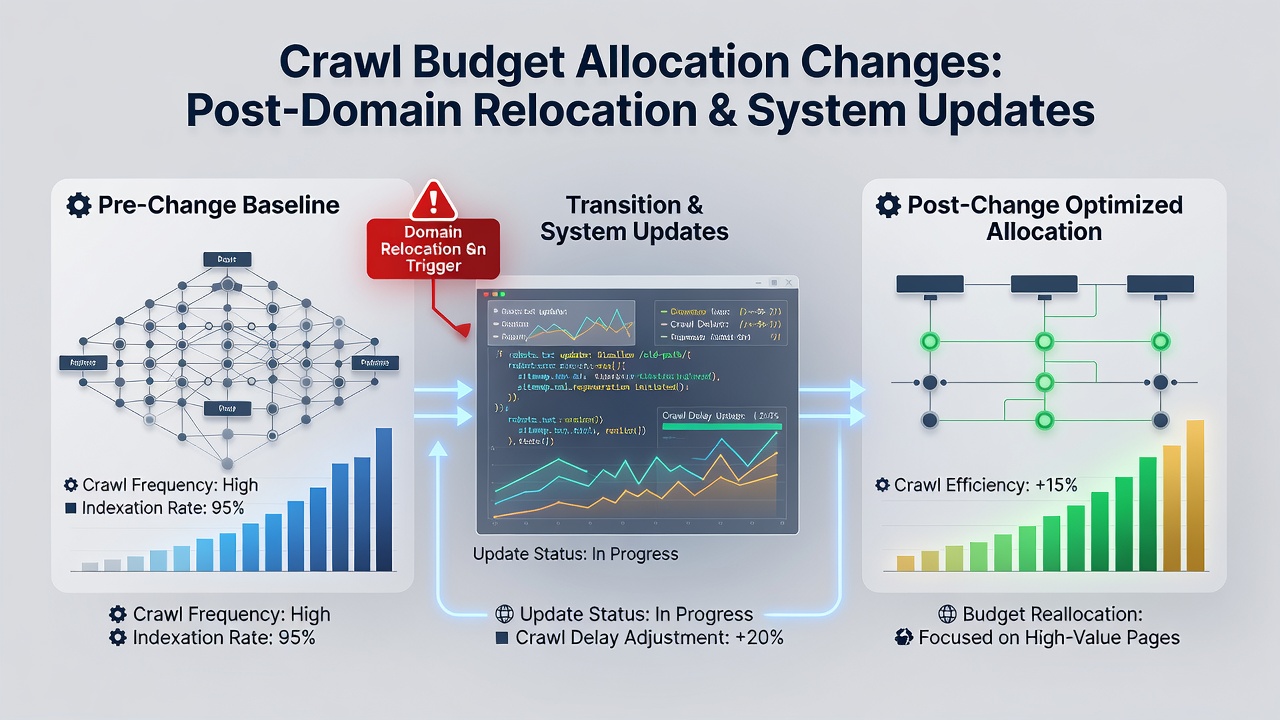
Relocating a domain involves mapping old URLs to new ones, and this transition period creates temporary imbalances in crawl distribution because engines must verify the legitimacy of the move before committing full resources. Observers note that sites completing clean migrations with comprehensive redirect maps see budgets stabilize within weeks, while incomplete setups lead to fragmented scanning where some pages get overlooked. In September 2026 multiple analytics platforms recorded similar sequences where relocated domains regained full crawl parity only after demonstrating consistent uptime and low error rates over successive weeks.
System updates introduce additional variables since changes to content management platforms or server configurations directly influence response times and page accessibility. Faster servers allow more pages to be fetched per visit, expanding the effective budget, whereas slower setups after an update can contract it until optimizations take hold. Experts tracking these interactions point out that combined relocation and update events produce the most pronounced shifts, as both the domain identity and technical foundation change simultaneously.
Technical Factors Driving Allocation Shifts
Server response codes play a central role because repeated 5xx errors or slow loads prompt engines to throttle visits, reducing overall budget allocation until reliability improves. Content duplication across old and new domains further complicates matters, since engines prioritize unique material and deprioritize redundant sections during the transition. Studies of migration logs indicate that canonical tags and updated sitemaps accelerate reallocation by clarifying preferred versions for indexing.
Platform changes often coincide with modifications to internal linking structures or schema markup, and these adjustments affect how deeply engines explore a site. Well-organized hierarchies encourage broader crawling, while broken links or outdated navigation slow the process. According to reports from the Google Search Central documentation, consistent internal signals help engines allocate resources more efficiently after major infrastructure shifts.
Monitoring and Measurement Approaches
Webmasters rely on log file analysis and search console data to quantify budget changes, tracking metrics like pages crawled per day alongside error frequencies. These tools surface patterns where post-relocation dips recover gradually as trust builds, and system updates either amplify or mitigate the decline depending on performance outcomes. Research from European web standards groups highlights that proactive monitoring during the first 30 days after migration identifies issues before they compound into longer-term indexing shortfalls.
Geographic variations appear in some datasets, with sites targeting audiences in regions served by different data centers showing distinct recovery curves. Canadian infrastructure analyses, for instance, note that latency differences across borders can extend the time needed for full budget restoration following domain moves paired with backend refreshes.
Recovery Timelines and Influencing Elements
Recovery follows predictable stages where initial discovery gives way to deeper exploration once redirects prove stable and content freshness matches expectations. Sites that maintain high-quality backlink profiles through the relocation process often experience shorter adjustment periods, since external signals reinforce the new domain's authority. System updates that improve mobile responsiveness or reduce page weight contribute positively here, expanding crawl capacity as engines detect the enhancements.
One documented case involved a mid-sized e-commerce platform that combined its domain move with a content delivery network integration, resulting in crawl rates returning to pre-migration levels within 45 days. Another example from academic web research showed that neglecting sitemap submissions after a system overhaul prolonged reduced allocation by several additional weeks.
Conclusion
Domain relocations and system updates reshape crawl budget allocation through interconnected changes in domain history, server behavior, and content presentation. Monitoring tools combined with precise redirect management and performance tuning allow sites to navigate these transitions effectively, restoring balanced resource distribution over time. Data from multiple tracking sources confirms that coordinated handling of both elements produces the most reliable outcomes for sustained indexing coverage.