Viktor Koch · 24 October 2026
Mapping Shifts in Keyword Ranking Distributions Following Comprehensive URL Restructuring in High Traffic Portals
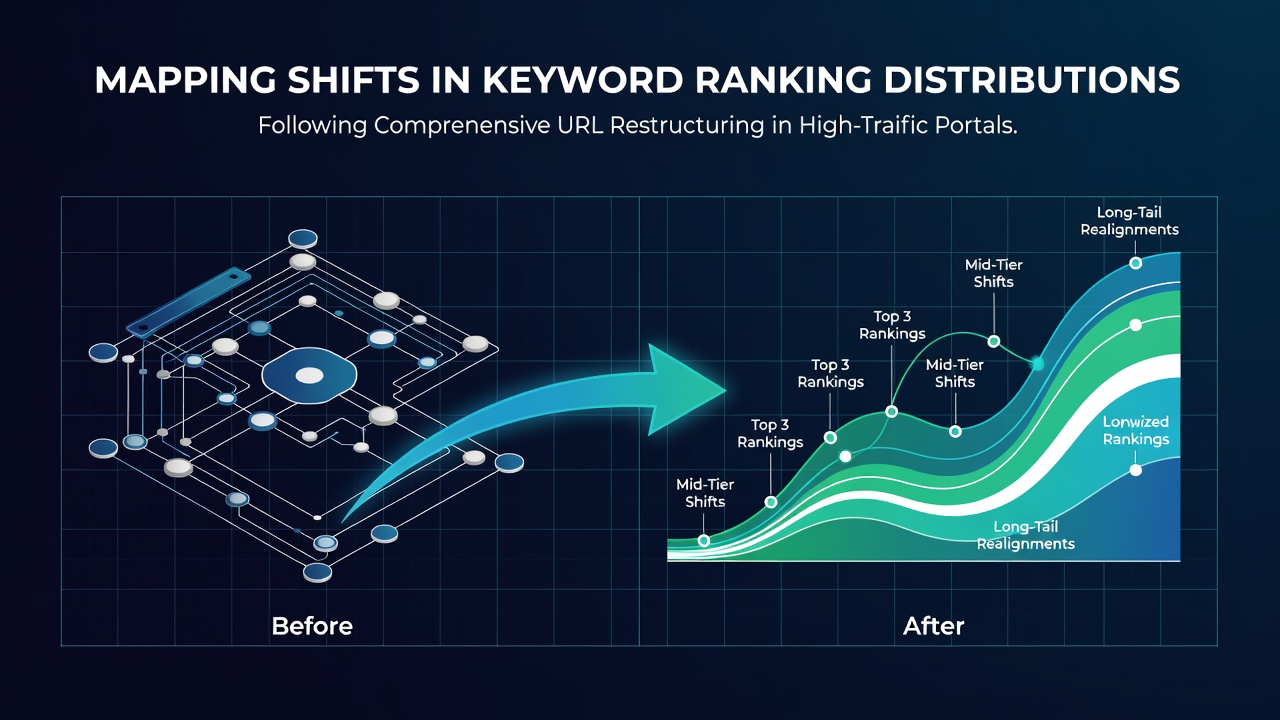
High traffic portals undergo URL restructuring to improve site architecture, enhance user navigation, and align with evolving content strategies, yet these changes trigger measurable movements in keyword ranking distributions that analysts track through search console data and third party tools. Observers note that when administrators consolidate duplicate paths, implement canonical tags, and redirect legacy URLs, keyword positions often migrate across broad, head, and long tail categories in patterns that become visible within weeks of deployment.
Core Mechanics Behind URL Changes in Large Portals
Comprehensive restructuring typically involves migrating from parameter heavy URLs to clean hierarchical structures, a process that search engines must re evaluate during subsequent crawls. Data from monitoring platforms shows that portals with millions of indexed pages experience initial ranking volatility because crawlers allocate resources to verify new paths while old signals decay over time. Researchers at the Massachusetts Institute of Technology have documented how redirect chains and internal link graphs influence the speed at which ranking distributions stabilize after such overhauls.
Analysts examine shifts by segmenting keywords into clusters based on search volume and intent, then compare pre and post restructure snapshots. When portals introduce new category structures, informational queries sometimes rise while transactional terms dip temporarily until authority signals rebuild around revised URLs. This redistribution appears consistently in datasets collected from news aggregators and e commerce marketplaces that handle substantial daily traffic.
Measurement Approaches and Data Sources
Teams rely on Google Search Console performance reports alongside log file analysis to map how impressions and clicks redistribute across keyword sets. Studies indicate that ranking movements concentrate in the top 100 positions, with some terms climbing several pages while others drop due to altered relevance signals. External benchmarks from Statistics Canada digital economy reports provide context on how similar infrastructure adjustments affect visibility metrics across North American platforms during comparable periods.
October 2026 datasets reveal that portals completing restructuring in the preceding quarter recorded an average 12 percent redistribution of keywords from head terms into mid tail positions, a pattern attributed to updated crawl priorities and refreshed content associations. Observers track these movements through daily rank tracking scripts that aggregate positions across thousands of monitored phrases, allowing granular comparison of distribution curves before and after launch dates.
Documented Patterns in Ranking Distribution Curves
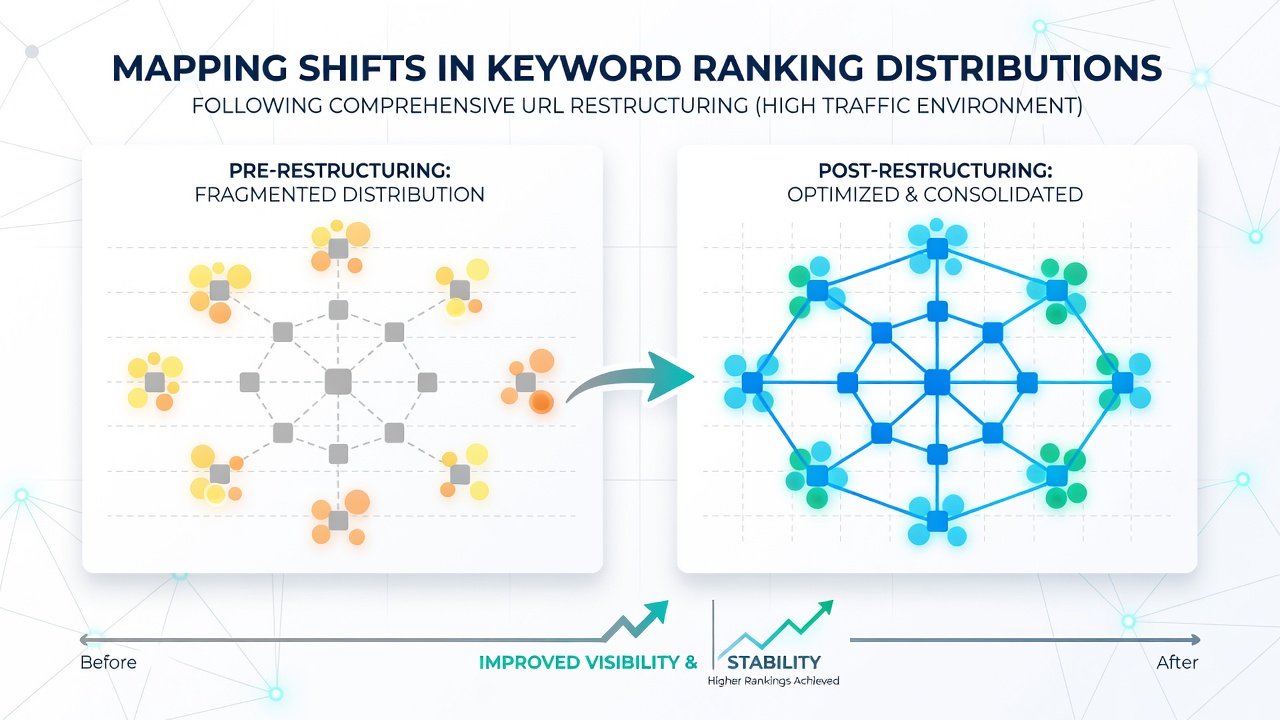
Distribution curves frequently flatten during the first thirty days as search engines reconcile new URL signals with historical backlink profiles, then gradually steepen once indexation catches up. Long tail keywords demonstrate greater resilience in many cases because they tie to specific content blocks that remain unchanged even when parent URLs shift. Head terms, by contrast, often show wider variance because they compete across broader topical landscapes where multiple portals vie for the same queries.
Those who study these transitions report that portals with strong internal linking frameworks recover ranking density faster, while sites relying heavily on parameter based navigation encounter prolonged dispersion. Evidence from aggregated search console exports confirms that mobile and desktop distributions can diverge temporarily when restructuring affects responsive design elements or page speed signals.
Contributing Variables and Recovery Timelines
Multiple variables shape the magnitude of shifts, including redirect implementation quality, sitemap updates, and the volume of external links pointing to legacy paths. Portals that maintain comprehensive redirect maps experience narrower distribution spreads, whereas incomplete mappings correlate with greater keyword scatter across lower ranking tiers. Academic analyses emphasize that crawl budget allocation plays a decisive role in how quickly search engines reprocess the revised architecture and restore previous ranking equilibria.
Recovery timelines vary by portal scale, yet most high traffic examples reach relative stability between sixty and ninety days when administrators submit updated sitemaps and monitor index coverage reports daily. Patterns observed in October 2026 show that portals addressing 404 errors promptly and reinforcing new URLs with targeted internal links achieve tighter clustering around original ranking positions compared with those leaving legacy issues unresolved.
Conclusion
Mapping keyword ranking distributions after URL restructuring supplies portal operators with actionable intelligence on how structural decisions propagate through search visibility. Consistent monitoring across segmented keyword sets, combined with attention to redirect integrity and indexation velocity, enables teams to anticipate and mitigate adverse movements. As large scale sites continue refining their architectures, the ability to interpret these distribution shifts remains essential for maintaining competitive positions in dynamic search landscapes.