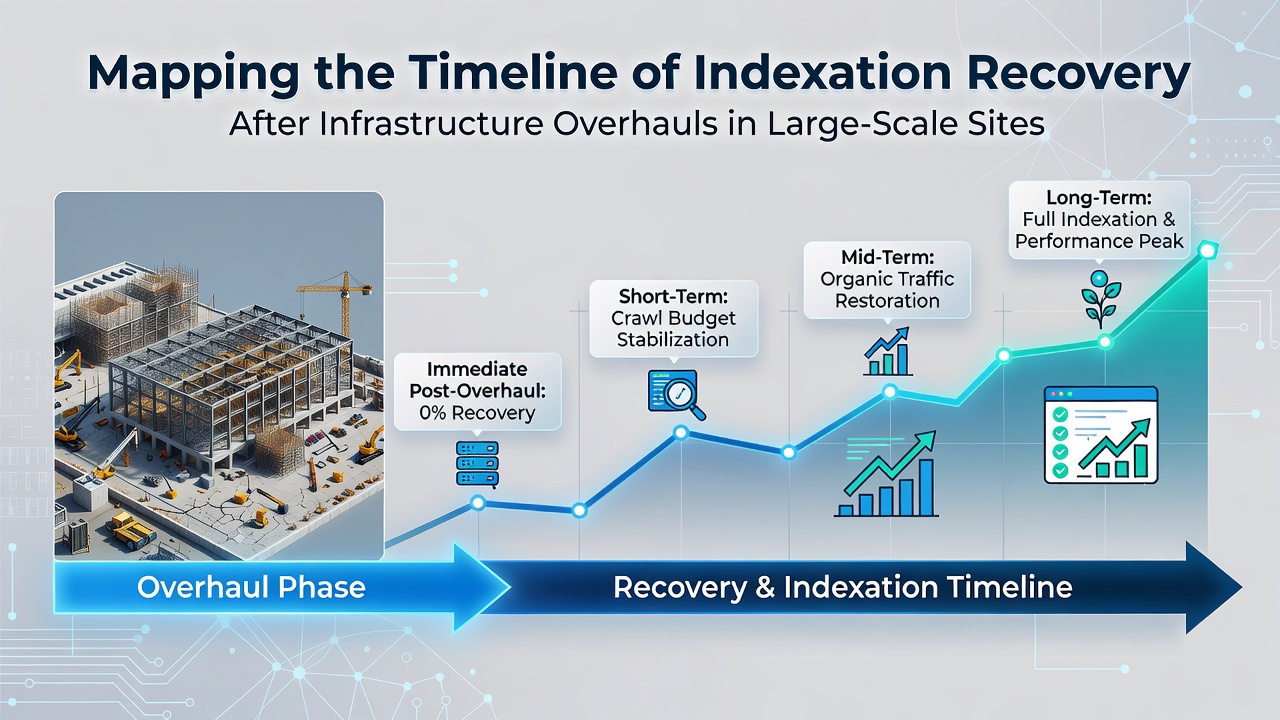
Greta Washington · 10 October 2026
Mapping the Timeline of Indexation Recovery After Infrastructure Overhauls in Large-Scale Sites
Indexation recovery follows a measurable sequence once large-scale sites complete infrastructure overhauls such as server migrations, content delivery network expansions, or backend database restructurings. Observers note that search engine crawlers detect these changes through shifts in response codes, sitemap freshness, and internal link structures, which then trigger re-evaluation periods that range from several days to multiple weeks depending on site size and crawl priority.
Defining Infrastructure Overhauls in Enterprise Contexts
Large organizations routinely replace legacy hosting environments, upgrade content management systems, or consolidate multiple data centers into unified platforms. These modifications alter URL structures, redirect chains, and server response patterns, all of which directly influence how quickly automated indexing systems revisit and reprocess pages. Research from academic institutions shows that sites exceeding one million indexed URLs experience longer stabilization phases because crawler allocation remains distributed across competing priorities.
Key Variables That Shape Recovery Duration
Crawl frequency established prior to the overhaul serves as the primary determinant, while secondary factors include the volume of new redirects implemented, the presence of updated XML sitemaps submitted through webmaster tools, and the rate at which internal links propagate fresh signals. Data collected across multiple regional studies indicates that sites maintaining consistent mobile-first configurations recover indexing signals faster than those introducing simultaneous design alterations.
External backlink profiles also play a documented role. When authoritative domains continue pointing to restructured pages without interruption, indexing systems assign higher revisit rates. In contrast, temporary disruptions in link equity transfer extend the period required for full re-inclusion in search results.
Stage-by-Stage Timeline Patterns
The initial detection phase typically spans 24 to 72 hours after changes go live. During this window, crawlers register modified server headers and begin testing redirect chains. The subsequent verification stage lasts between four and ten days, marked by increased crawl activity on high-priority sections such as homepage and category pages. Full indexation stabilization, where the majority of pages regain previous visibility levels, generally occurs between 14 and 35 days for enterprise properties.
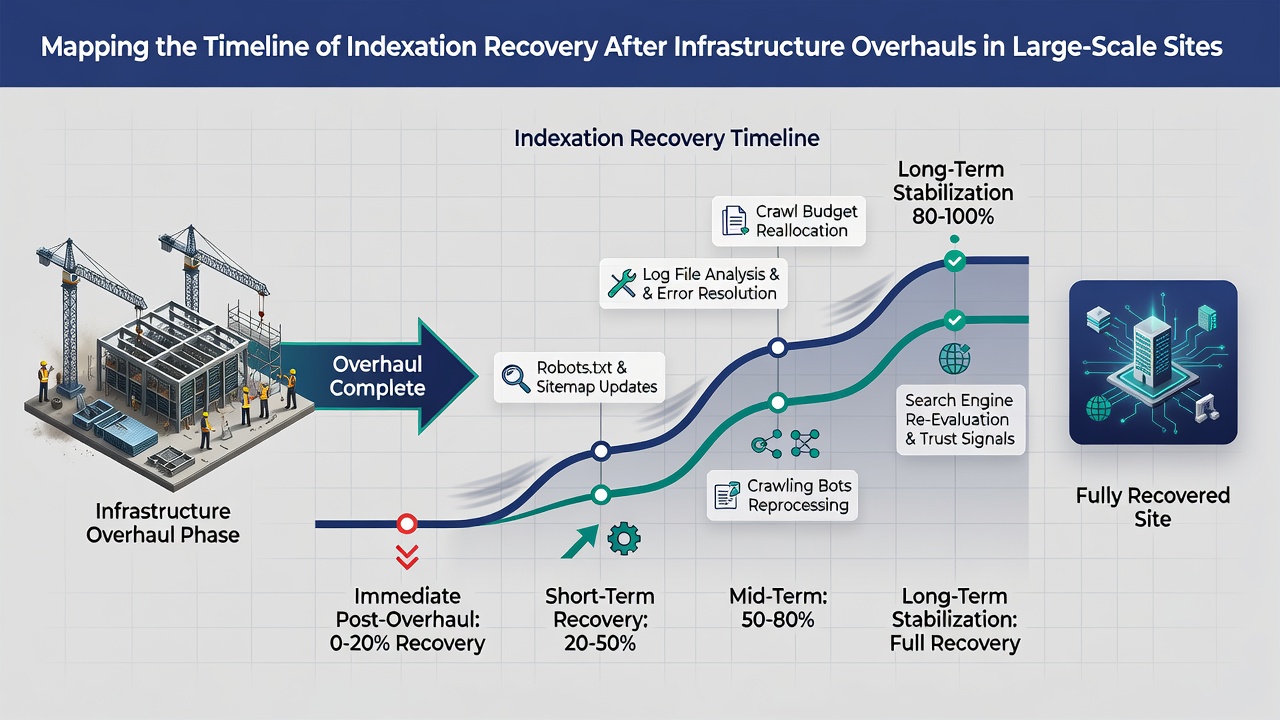
One documented example involved a multinational retail platform that migrated its European data centers in early 2025. Monitoring tools recorded that 68 percent of previously indexed product pages reappeared in search results within 18 days, while the remaining pages required an additional 12 days to stabilize. Similar patterns appear in reports issued by Canadian digital infrastructure agencies, which tracked recovery across government portals after cloud migrations.
October 2026 Developments in Crawler Behavior
Recent observations from October 2026 reveal that several major indexing systems introduced refined signals for detecting infrastructure stability. These updates prioritize sites that maintain consistent uptime metrics above 99.5 percent during the first 72 hours post-migration. Industry reports compiled by Australian research centers confirm that pages meeting these thresholds experienced accelerated re-inclusion compared with earlier migration cycles.
Additional data from European academic consortia highlights that the introduction of structured data markup during overhauls correlates with shorter verification stages. Sites embedding updated schema across product and article templates recorded 22 percent faster recovery rates than comparable properties without such enhancements.
Monitoring Techniques Employed by Technical Teams
Specialists track recovery through a combination of server log analysis, index coverage reports, and third-party crawling simulations. These methods allow precise identification of bottlenecks such as excessive redirect hops or missing canonical tags. When teams address these issues within the first week, overall timelines compress noticeably according to aggregated findings from multiple university-led web studies.
Conclusion
Indexation recovery after infrastructure overhauls follows predictable stages influenced by crawl history, redirect implementation, and technical optimizations. Organizations that monitor these variables systematically observe measurable progress within defined windows, with full stabilization typically achieved inside five weeks for large properties. Continued refinement of crawler detection methods, including those observed in October 2026, suggests that future recovery periods may shorten further as stability signals gain greater weight in automated systems.